

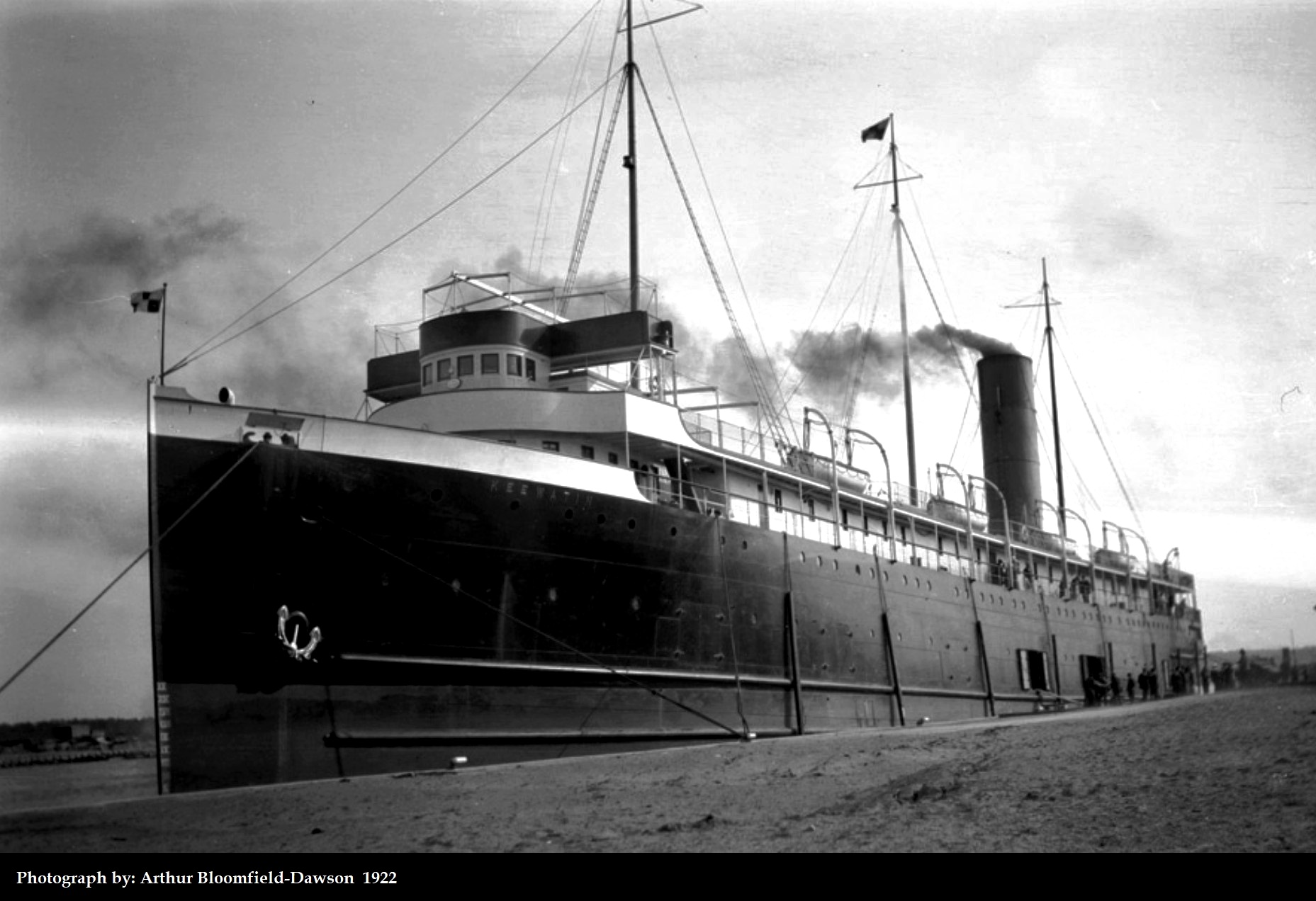
SS Keewatin – launched in 1907 (5 years before Titanic), and now the only remaining Edwardian era steamship still existence… in fact she is still afloat in the dry dock at ‘Great Lakes Museum’ in Kingston, Ontario.
Learn a little more of this amazing ship’s history here —>
Marconi’s Legacy in the Foundation of Canada’s Maritime Radio…
On December 12, 1901 at his receiving station at Signal Hill in St.John’s Newfoundland, Guglielmo Marconi hears 3 sharp clicks ( the Morse code letter ‘S’) as it is being sent across the Atlantic Ocean from his transmitting station 3,540 kilometers away in Poldhu (near Cornwall) England, ushering in the era of long-distance radio communication.
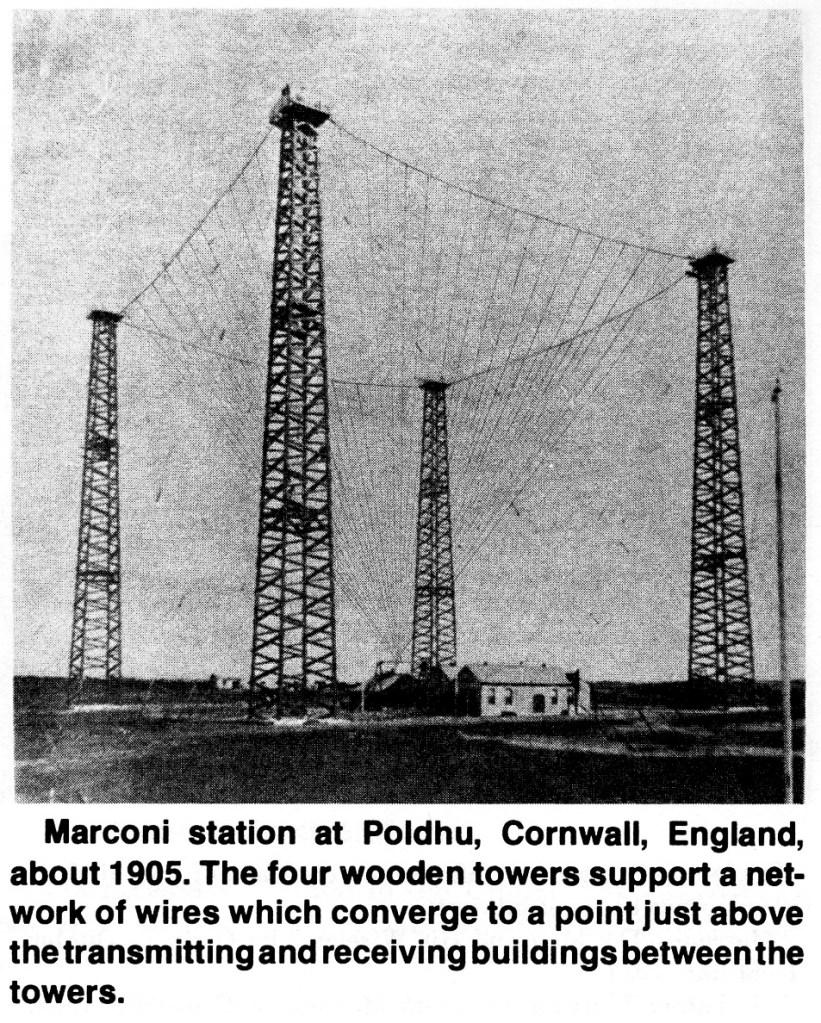

In 1902 the Canadian governement enters a contract with Marconi, assigning him the rights for design / construction / and operation of the first radiotelegraph stations in Canada. Later that same year, the first station is established at Table Head in Glace Bay, Nova Scotia (call sign VAS)
In 1903, the ‘Marconi Wireless Telegraph Company of Canada’ is incorporated and based in Montreal. For the next 15 years, Marconi has a monopoly on the development of radio-telegraphy operations in Canada.
By 1904 a Marconi radio-telegraph station is installed at Cape Race, Newfoundland, call sign CE (later changed to MCE and then finally to VCE) … 8 years later the station at Cape Race would become famous for its’ role in relaying distress signals from the ill-fated RMS Titanic, 1912.
Significance of radiotelegraph communication for the safety of vessels at sea was rapidly becoming apparent and by the end of 1904 Marconi and the Canadian governement had established shore based marine radiotelegraph stations on the St.Lawrence River at Father Point, Quebec (VGF), Quebec City (VGQ), and RImouski (VGR).
1st October 1907 – SS Keewatin is registered in Montreal to the Canadian Pacific Railway
1910 – the first marine radiotelegraph station on the Great Lakes is establihsed at Port Arthur (VBA)…today the Canada Coast Guard station at Thunder Bay. By 1912 additional shore based stations are established at Sault Ste Marie (VBB), Midland VBC), and Tobermory (VBD).
The sinking of Titanic in 1912 resulted in profound changes to international maritime safety standards, including establishement of the ‘International Convention for the Safety of Life at Sea’ (SOLAS). In Canada, the 1913 Radiotelegraph Act introduced the first formal licencing requirements for radio operations, and granted governement regulatory authority over all aspects of wireless communication within Canada.
During the early years of radio operations onboard vessels in Canada, Radio Officers were employed by the Marconi Wireless Telegraph Company of Canada, and assigned to a particular ship. This composite portrait (donated to Great Lakes Musuem, from the Toronto Marine Museum archives) shows the radio officers assigned to various Great Lakes vessels, as well as those staffing the shore based station at Port Arthur in 1913.
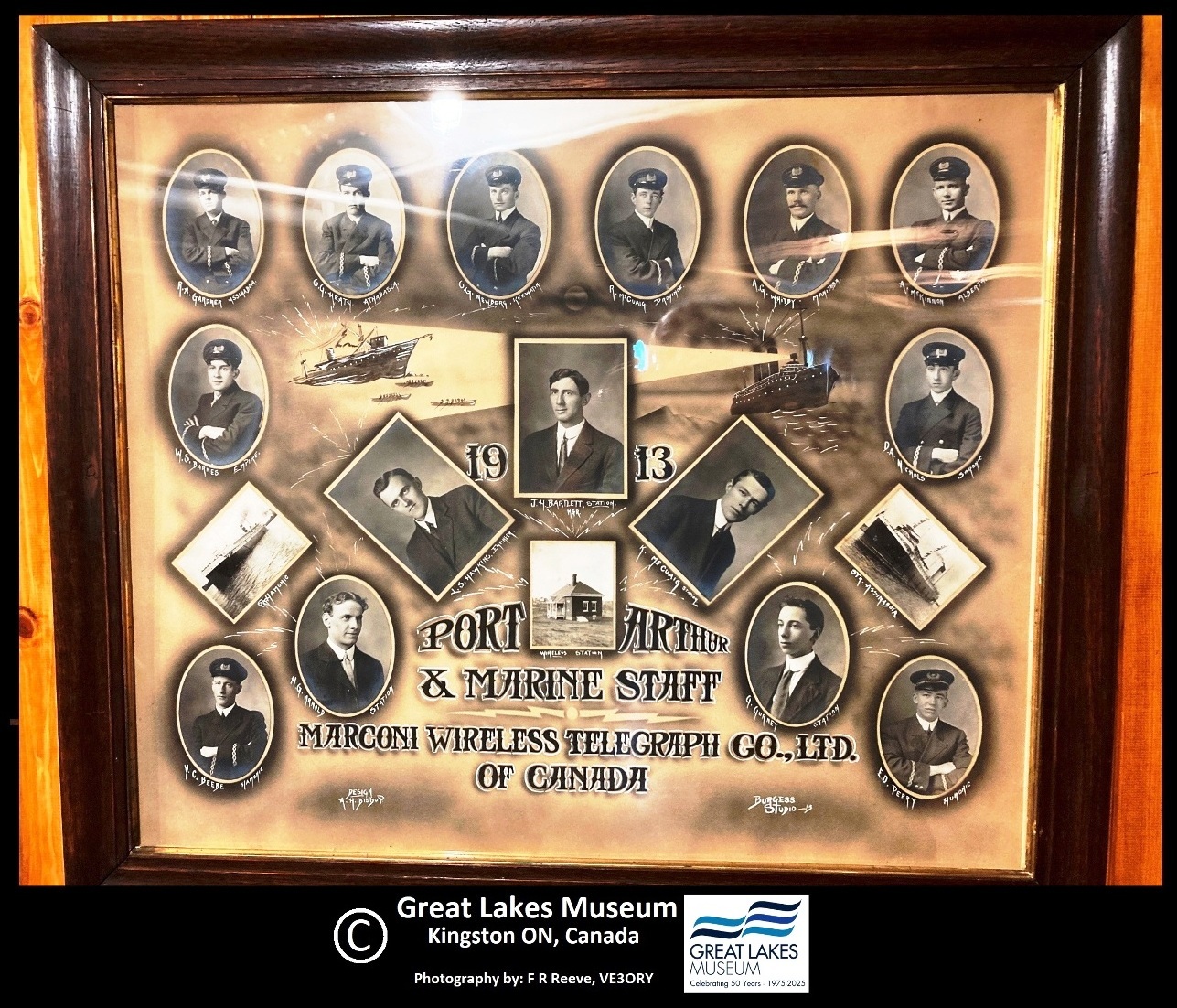
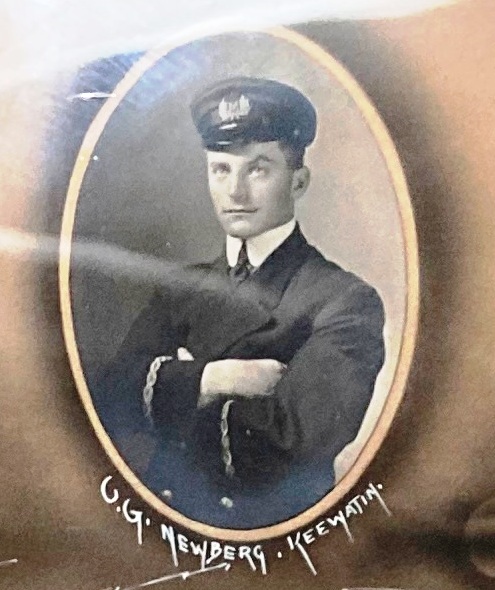
Included in the above is a portrait of Radio Officer C.G. Newberg assigned to
SS Keewatin

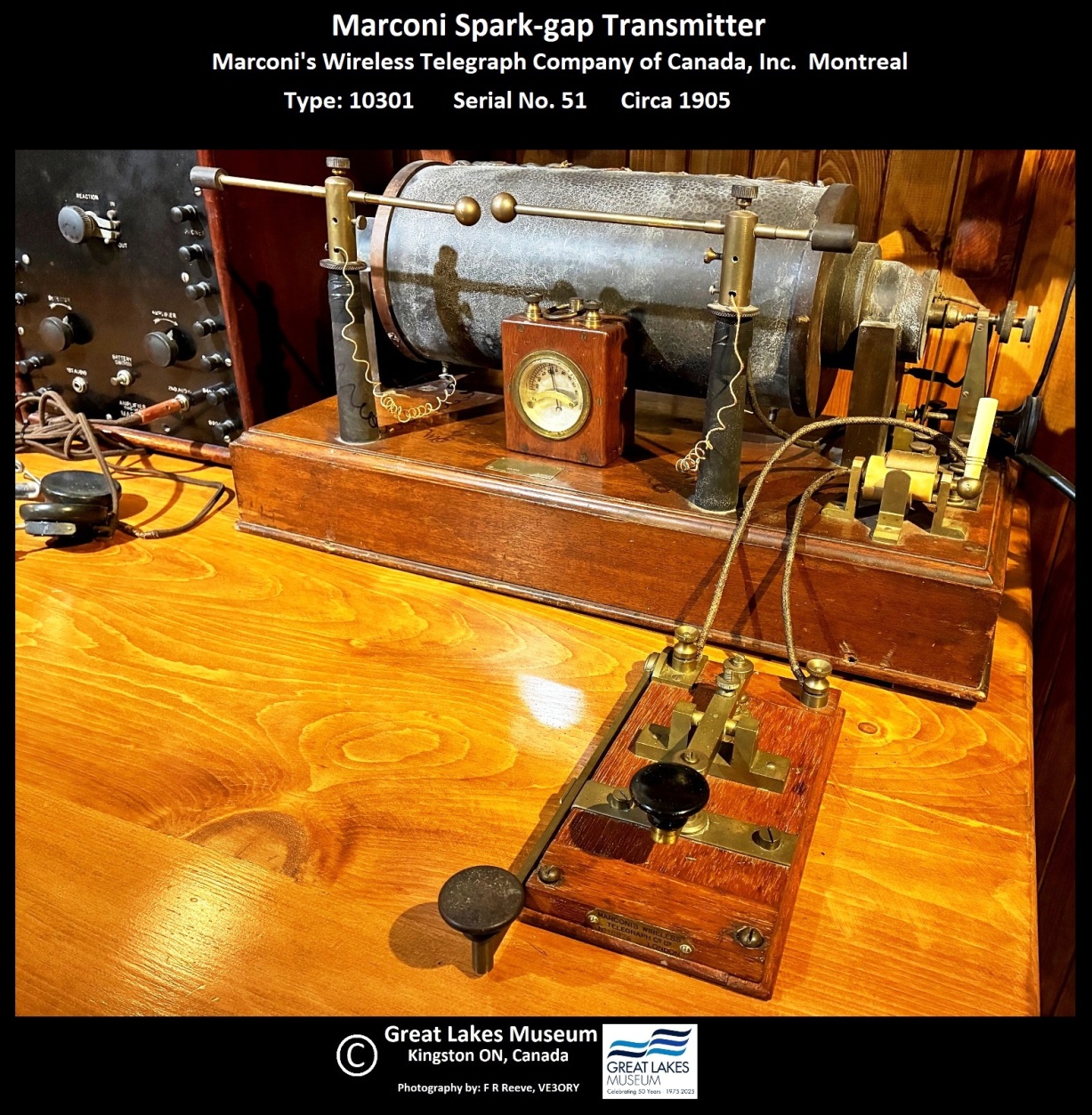
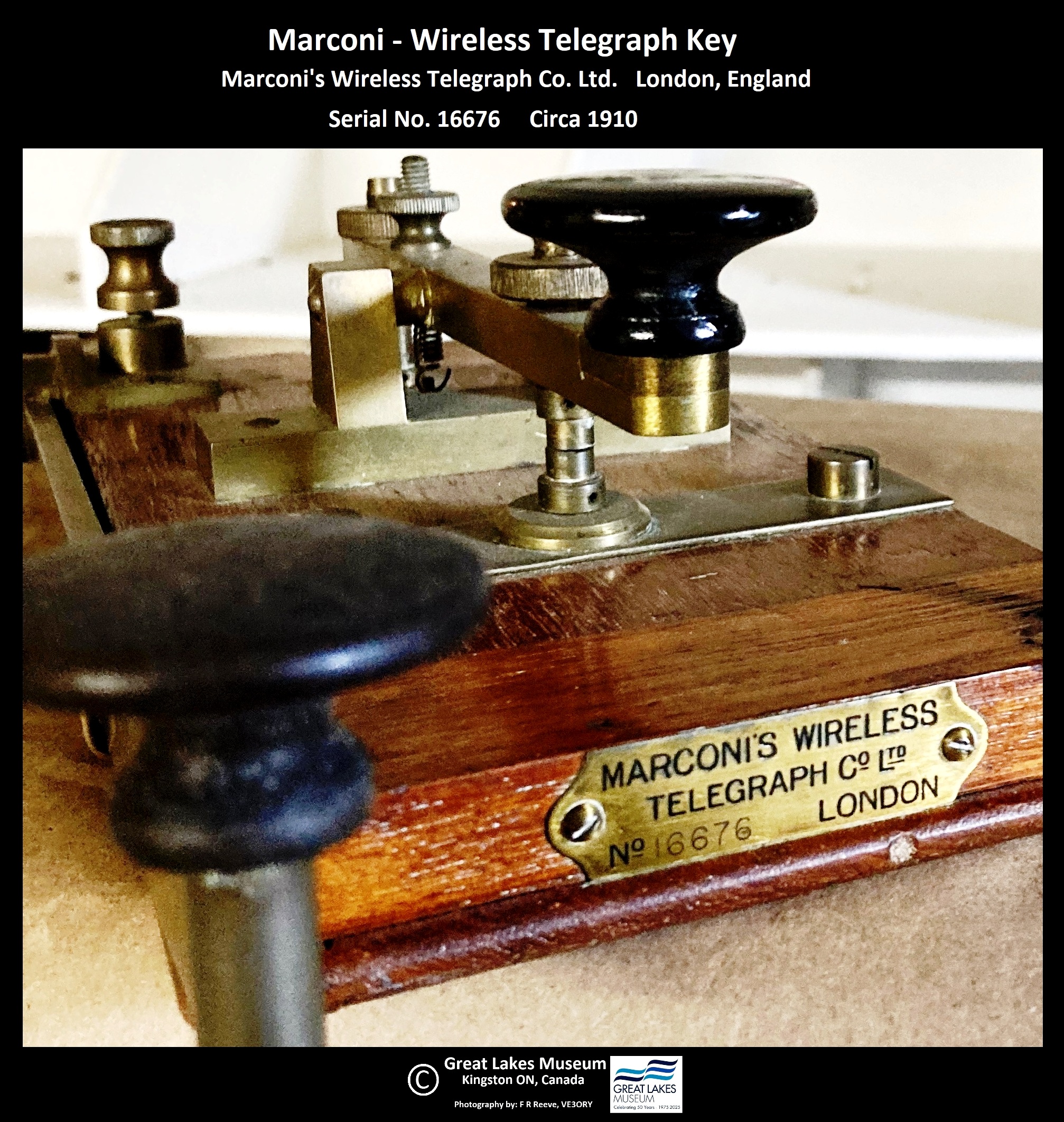
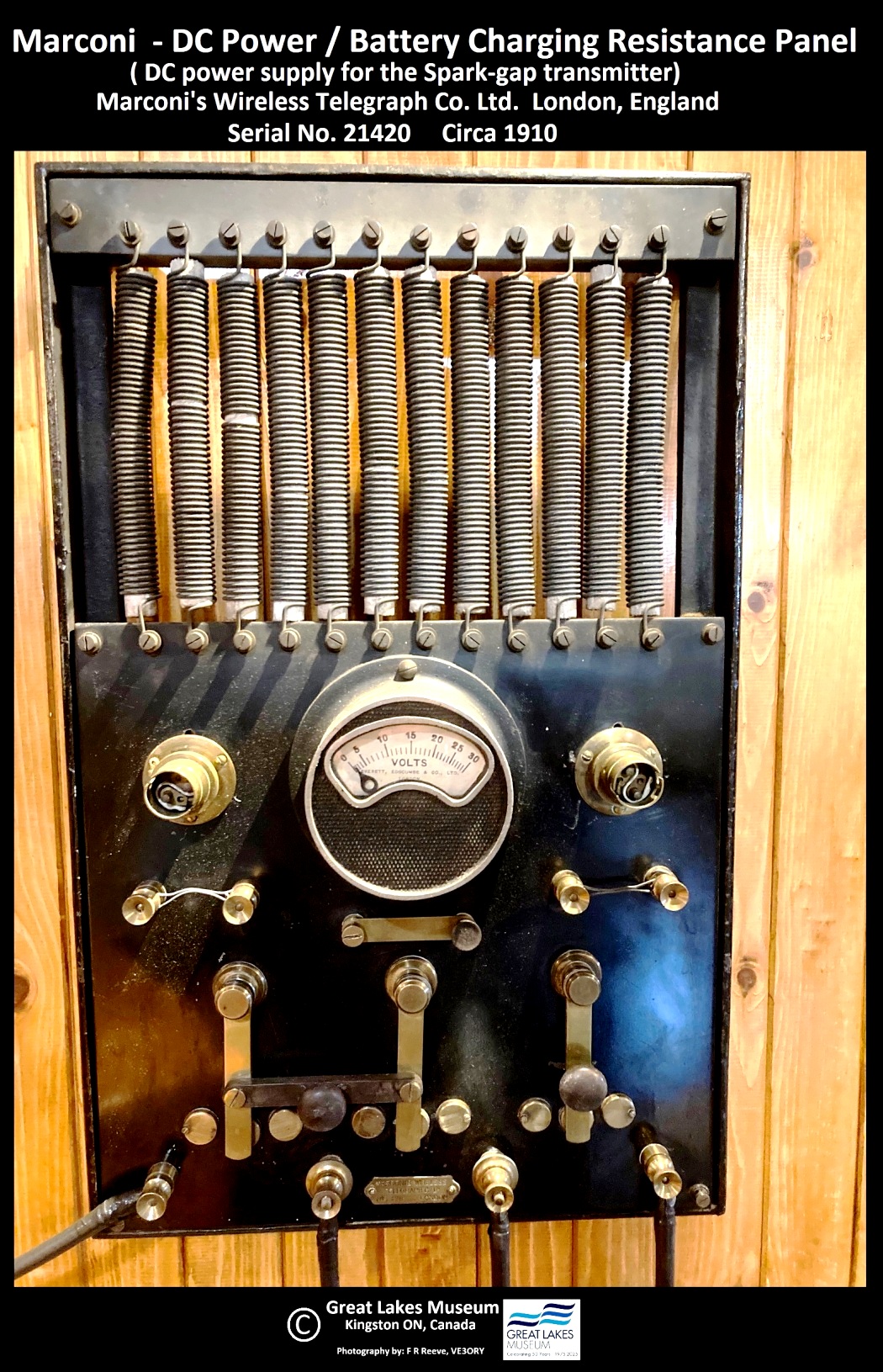
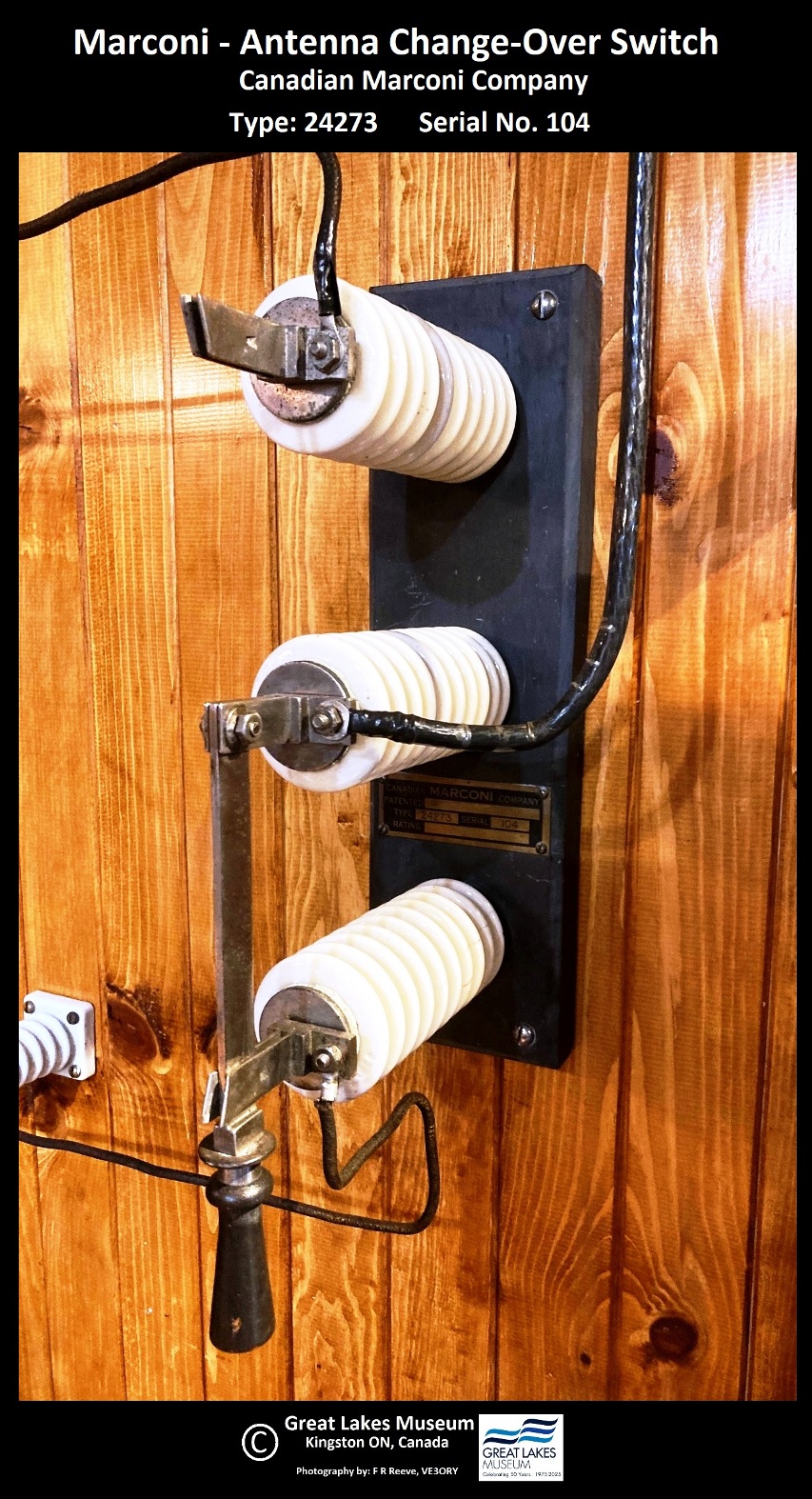
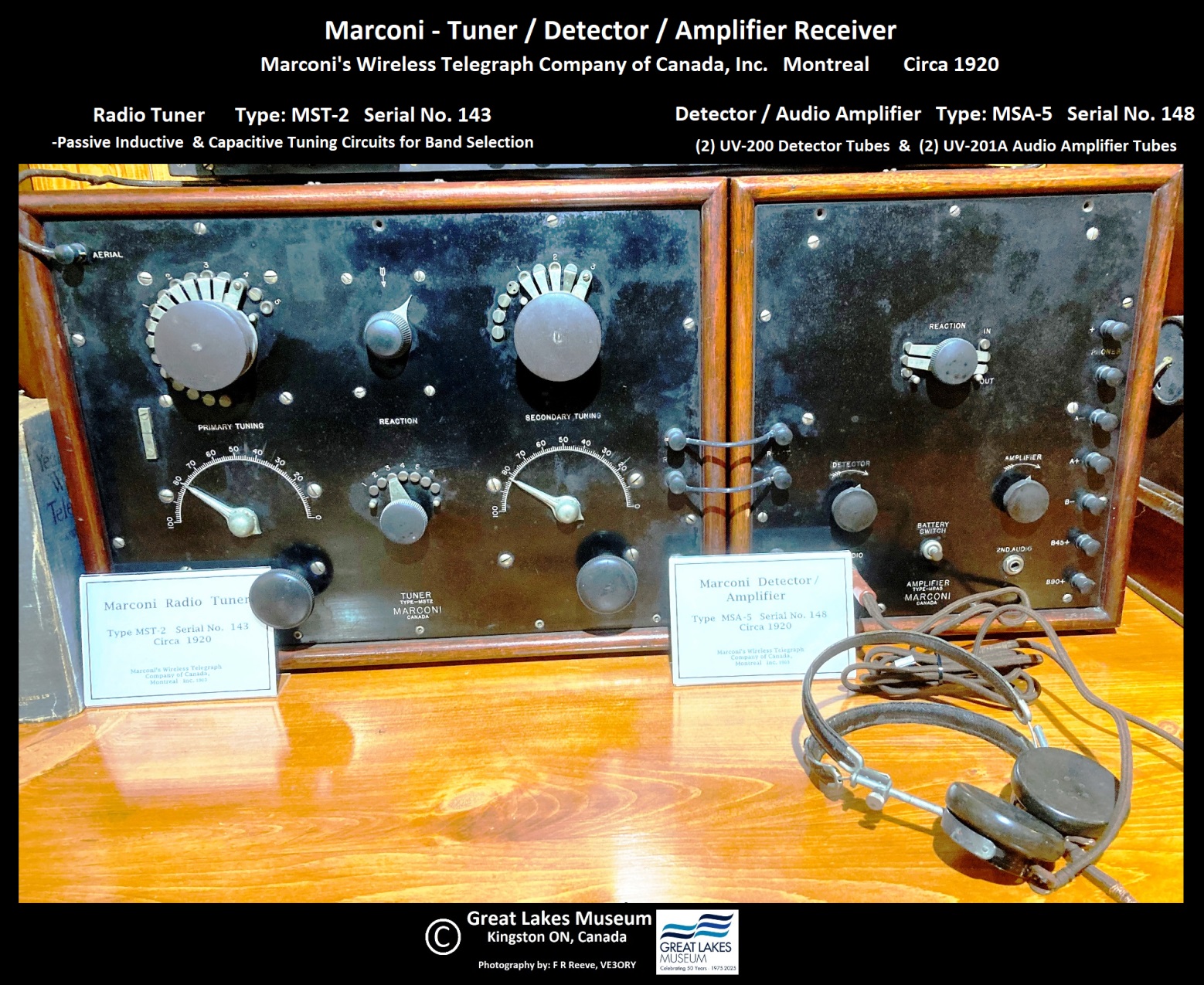
The following are images of authentic early vintage Marconi radio equipment now on display onboard SS Keewatin at the Great Lakes Museum, in Kingston Ontario. All of these items graciously donated in 2024 by the Toronto Maritime Museum archives. These items reported to have been originally installed aboard Keewatin’s sister ship SS Assiniboia. Each of these priceless artifacts includes a Marconi nameplate showing model or type, serial number or patent number, and place of manufacture. Most show as having been manufactured in Montreal by the Marconi Wireless Telegraph Company of Canada, Ltd. Two of these items are shown as manufactured by Marconi’s Wireless Telegraph Company in London, England.
You really need to see these in person to appreciate that you are looking at actual components of the very earliest examples of radio communication in existance. And, to realize that just 120 years ago these were cutting edge advancements in the scientific knowledge that existed at the time…a stark example of just how fast our world is changing.
Click on the following images for an expanded view…



 Canadian Amateur Radio Heritage